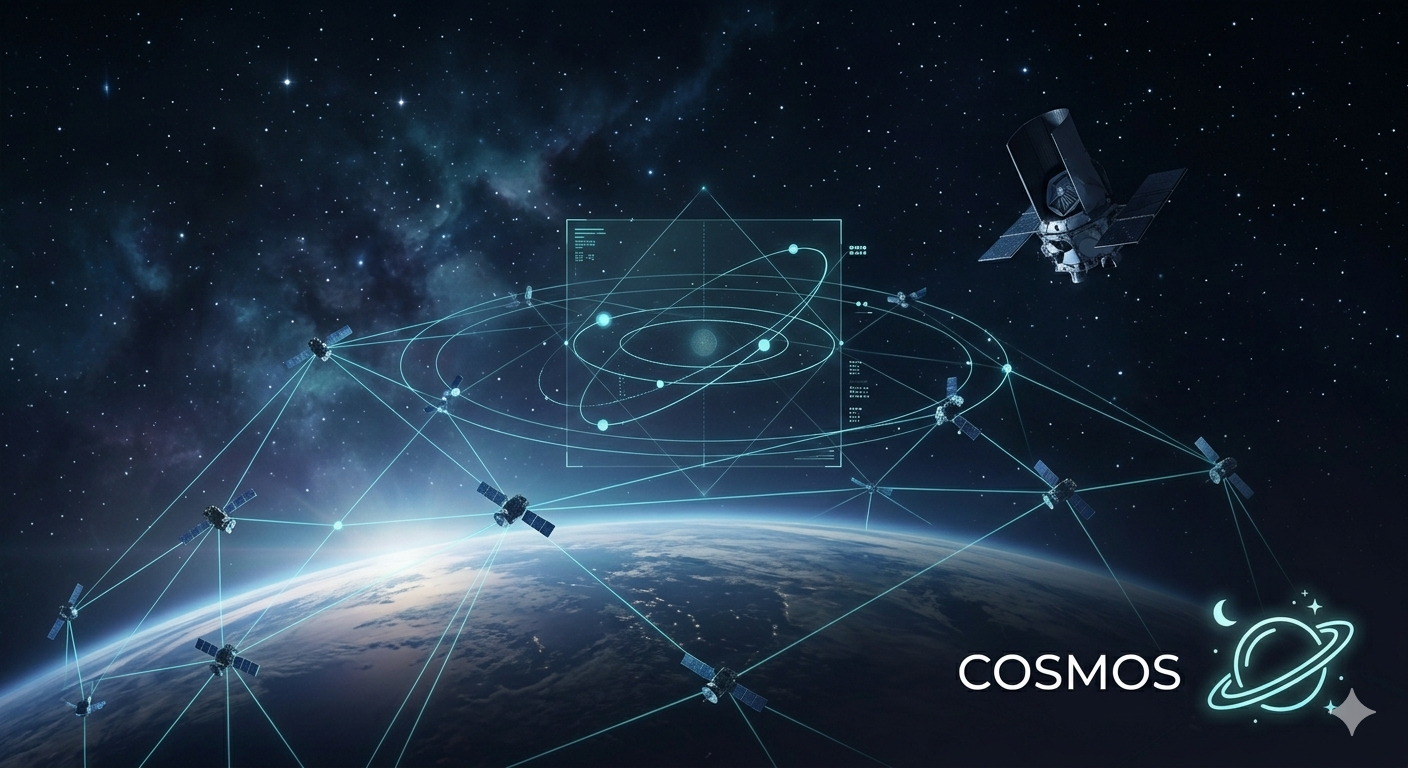
Cosmos represents the intersection of observational astronomy, astrophysics, and the technological evolution required to explore the expanse beyond our atmosphere. At Terralinx, we approach the study of space not merely as a destination, but as the ultimate laboratory for physics and engineering. From the analysis of orbital dynamics and celestial mechanics to the interpretation of deep-space data streams, our work is dedicated to expanding the boundaries of human and robotic reach.
Understanding the universe requires a mastery of vast scales—both in time and distance. Our research and analytical focus encompass the gravitational interactions that govern planetary motion, the propagation of electromagnetic radiation across the void, and the atmospheric and environmental challenges inherent in space-based operations. By applying rigorous physical modeling to astronomical data, we seek to map the unknown, providing precise insights into the phenomena that define our place in the galaxy.
We bridge the gap between theoretical astrophysics and practical aerospace engineering. Whether assessing the trajectory of orbital objects, simulating the structural demands of high-velocity spacecraft, or decoding signals from remote sensors, our methodology is built on a foundation of scientific accuracy. We recognize that space is an environment of extreme variables, where success depends on the stability of our models and the resilience of our technical systems.
With a commitment to exploratory excellence, we provide the depth of analysis required to navigate the complexities of the orbital and deep-space domains. We transform the vast, often chaotic nature of cosmic data into structured, actionable knowledge, ensuring that every observation brings us closer to a deeper understanding of the physical laws that orchestrate the universe.